Within Foreign Materiel
Why Countermeasures Need Real Hardware
Jammers, decoys and defensive tactics work best when engineers can test against measured enemy signals.
On this page
- Signal measurements
- Jamming and deception
- Testing against realistic threats
Page outline Jump by section
Introduction
Countermeasures built from real enemy systems are one of the most practical payoffs of reverse engineering foreign military technology. A jammer, decoy, warning receiver or defensive tactic is only as good as its match to the threat it is meant to fool. Engineers can estimate a radar’s frequency, a missile seeker’s behaviour or a radio network’s habits from observation, but physical hardware and measured emissions turn guesswork into testable data. That is why foreign materiel exploitation programmes do not stop at “what is this weapon?” They ask: what exactly does it sense, what does it ignore, what tricks it, and how can friendly forces rehearse against something close enough to the real threat to matter?
The United States Army’s own budget language makes this link explicit: acquiring and exploiting foreign ground materiel reduces uncertainty, supports realistic testing and training, and aids countermeasure development; it also notes that captured threat materiel can require immediate exploitation to develop force-protection measures.[Army Financial Management]asafm.army.milFinancial Management Justification BookFinancial Management Justification Book
Real hardware turns threat intelligence into engineering data
A modern military sensor is not defined by its brochure claims. What matters for countermeasures is the behaviour of the actual system: the timing of a radar pulse, the way a missile seeker processes a flare, the side-lobes of an antenna, the tolerances in a receiver, the software logic that rejects false targets, and the maintenance condition in which troops actually use it. Those details can decide whether a defensive system merely looks plausible in a laboratory or works against a battlefield threat.
Foreign materiel exploitation therefore sits between intelligence and engineering. The US National Air and Space Intelligence Center describes the mission as acquiring, assessing and exploiting foreign air and space threats so US forces can avoid technological surprise and counter evolving adversary systems.[NASIC]nasic.af.milNASICAcquire, Assess, ExploitNASICAcquire, Assess, Exploit In more concrete acquisition language, the Army’s “Exploitation of Foreign Items” programme covers acquisition, exploitation and inventory of foreign materiel, with countermeasures and force protection listed as direct outputs rather than side benefits.[Army Financial Management]asafm.army.milFinancial Management Justification BookFinancial Management Justification Book
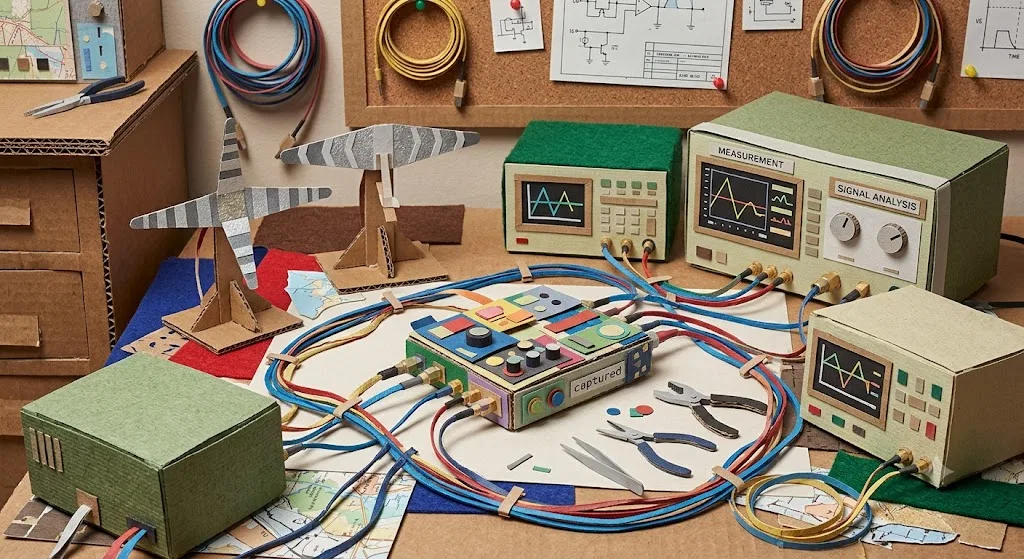
The reason is straightforward: electronic warfare is a contest of tolerances. A radar jammer must transmit in the right part of the spectrum and with the right timing to affect the victim receiver. A decoy must present a target that the enemy sensor accepts as real. A missile warning system must recognise the threat fast enough without drowning the crew in false alarms. A simulator used in testing must reproduce enough of the threat’s real behaviour that a successful test means something outside the range.
That is also why official test organisations distinguish between a generic “threat representation” and one validated against real systems. The Department of Defense’s Test and Evaluation Threat Resource Activity, or TETRA, says it supports operational and live-fire testing with foreign materiel, physical surrogates, digital representations, models, simulations and digital twins, all grounded in intelligence analysis.[Dote]dote.osd.milOpen source on osd.mil. That wording matters: a countermeasure is not just designed against an enemy weapon; it is tested against an evidence-backed representation of how that weapon behaves.

Signal measurements: what engineers need that observation cannot supply
The first countermeasure value of a captured or otherwise obtained system is measurement. In radio-frequency and electro-optical warfare, the decisive facts are often invisible to ordinary observation. Engineers want to know not just that a radar exists, but how it searches, tracks, changes modes and responds when deceived. They want to know not just that a missile homes on heat, but what pattern in the seeker electronics makes it follow an aircraft, a flare or a jammer.
For radar and communications systems, useful measurements can include:
- the frequencies and bandwidths used in each operating mode;
- pulse timing, scan rate and waveform structure;
- how the receiver behaves when overloaded, saturated or presented with false returns;
- how quickly the operator or automated logic can change modes;
- the difference between factory design and fielded performance.
For infrared-guided missiles, the useful measurements are different but the logic is the same. Engineers may study the seeker’s spectral sensitivity, reticle or scan pattern, lock-on logic, field of view and response to flares, hot engine parts or modulated infrared energy. A countermeasure that works against one generation of seeker can fail against the next if the seeker rejects the old trick.
The AN/ALQ-144 infrared jammer is a useful public example of this cycle. A 1991 US Department of Defense Inspector General report explained that the AN/ALQ-144 emitted misleading signals to confuse infrared-seeking threat guidance systems. It worked against early infrared seekers, but advances in threat technology reduced its effectiveness; Army operational testing found that the improved AN/ALQ-144A was effective against known threat systems when used with infrared suppression.[U.S. Department of War]media.defense.govU.S. Department of War Use of Foreign Materiel Exploitation ResultsU.S. Department of War Use of Foreign Materiel Exploitation Results(https://media.defense.gov/1991/Jun/18/2001714503/-1/-1/1/91-099.pdf) The lesson is not simply that a better box replaced an older box. It is that countermeasure design had to follow measured changes in the enemy seeker problem.
That same report also shows why countermeasure performance is not only a laboratory question. The jammer required proper operation and maintenance; auditors found low operating hours and poor adherence to procedures, and warned that inoperative jammers in a threat environment could create immediate vulnerability and potentially catastrophic mission failure.[U.S. Department of War]media.defense.govU.S. Department of War Use of Foreign Materiel Exploitation ResultsU.S. Department of War Use of Foreign Materiel Exploitation Results(https://media.defense.gov/1991/Jun/18/2001714503/-1/-1/1/91-099.pdf) A real enemy system may drive the design, but realistic use determines whether the design protects anyone.
Jamming and deception depend on knowing the receiver
The simplest way to think about jamming is “make noise so the enemy cannot see.” That is sometimes true, but it is an incomplete picture. Many valuable countermeasures are not brute-force noise; they are deception. They try to make a sensor see the wrong range, wrong angle, wrong speed, wrong target count, or wrong heat source. Deception usually needs more knowledge of the enemy receiver than blanket interference does.
Cold War programmes illustrate this well. In work connected with the CIA’s high-altitude reconnaissance aircraft, US engineers studied Soviet radar behaviour because the survival of aircraft such as the U-2 and A-12 depended on what Soviet radars could actually detect and track. A declassified National Security Archive study on stealth, countermeasures and electronic intelligence describes the interaction between reconnaissance aircraft, radar warning receivers, Soviet radar signals and countermeasure development during this period.[National Security Archive]nsarchive2.gwu.eduOpen source on gwu.edu. CIA museum material on the A-12 similarly notes that early U-2 flights were picked up by Soviet radar, driving the search for aircraft that could fly higher and faster and reduce vulnerability.[CIA]cia.govOpen source on cia.gov.
Project Palladium, described publicly by CIA engineer Gene Poteat and later historical accounts, went further than passive listening. It used electronic means to create phantom radar targets and assess Soviet radar sensitivity and reactions. Poteat wrote that Palladium operations combined a CIA team with a “ghost aircraft” system, an NSA team monitoring communications links, and military support, and that such operations were conducted against Soviet radar sites on land, ships and submarines.[tbp.org]tbp.orgEngineering in the CIAEngineering in the CIA The important point for this page is not the drama of the operation, but the mechanism: deception countermeasures improved when engineers could observe how real hostile radar operators and systems reacted to controlled false signals.
Modern industry descriptions use less dramatic language but point to the same mechanism. Leidos, for example, describes electronic warfare work that characterises threat weapon-system performance, reveals vulnerabilities, provides realistic threat responses for electronic-attack technique development, and supplies jammer waveforms and models for electronic-protection development.[Leidos]leidos.comOpen source on leidos.com. In plainer terms, a jammer is not built in isolation. It is shaped by the observed behaviour of the receiver it must defeat.
Decoys are useful only when the enemy accepts the lie
Decoys are often more dependent on real threat data than noise jammers. A decoy has to be believable to a sensor, a missile, an operator or an automated fire-control chain. If it is too bright, too slow, too regular, too poorly placed or wrong in some signature detail, it may fail precisely when needed.
This is why test organisations invest in threat surrogates and decoys rather than relying only on generic targets. TETRA’s recent annual material says decoys of foreign surface-to-air missile systems have been in demand for “threat density and operational realism”; its FY2024 material links foreign materiel acquisition to range capability for systems including F-35 and B-21 testing.[Dote]dote.osd.milDote Test and Evaluation Threat Resource Activity (TETRADote Test and Evaluation Threat Resource Activity (TETRA Its FY2025 summary also says it supports verification, validation and certification of physical and digital threat surrogates, including models, simulations and digital twins.[Dote]dote.osd.milOpen source on osd.mil.
The countermeasure implication is clear. Testing an aircraft defensive-aids suite against a single pristine threat emitter on a range is not the same as testing it against many realistic emitters, decoys and representations inside a dense air-defence environment. Modern aircraft may face integrated air defence systems, not isolated radars. Defensive tactics and onboard countermeasures therefore need to be tested against combinations of search radars, tracking radars, missile seekers, communications links, decoys and operator behaviour.
This is where reverse engineering shifts from “captured object on a bench” to “threat environment on a range”. Real hardware provides measurements. Those measurements feed surrogate radars, target emitters, missile models and digital twins. Those tools then expose aircraft, crews and software to enough of the enemy system’s behaviour to reveal whether a countermeasure works as a system rather than as a claim.
Testing against realistic threats closes the loop
A countermeasure that has not been tested against a realistic threat can create dangerous confidence. It may work against the simplified model used by its designers but fail against a production variant, an upgraded seeker, an unexpected operating mode or a combined threat environment. This is why the test-and-evaluation community treats threat validation as a discipline of its own.
A 1997 Department of Defense Inspector General report on use of foreign materiel exploitation results described foreign materiel exploitation as analysis, testing and evaluation of foreign materiel, including testing against US equipment. It also discussed threat validation: documenting the differences between simulated threat systems and the real threats they represent so those differences can be factored into test planning and evaluation.[U.S. Department of War]media.defense.govU.S. Department of War Use of Foreign Materiel Exploitation ResultsU.S. Department of War Use of Foreign Materiel Exploitation Results(https://media.defense.gov/1997/Oct/08/2001715489/-1/-1/1/98-005.pdf) That last phrase is central. No simulator is perfect, but an unacknowledged gap is far more dangerous than a known limitation.
The same logic appears in current budget and test documents. TETRA says it produces intelligence-driven analysis, models and simulations for current and emerging threats, facilitates exploitation of critical foreign materiel for testing, and supports foreign materiel and digital representations for operational and live-fire evaluation.[Dote]dote.osd.milOpen source on osd.mil. The US Army’s current justification for exploiting foreign items similarly links captured threat materiel to immediate countermeasure and force-protection work.[Army Financial Management]asafm.army.milFinancial Management Justification BookFinancial Management Justification Book
Realistic testing also exposes practical trade-offs. The AN/ALQ-144 case showed that a jammer’s value depended on upgrades, infrared suppression, maintenance and whether the aircraft community accepted the weight, power and procedural burden.[U.S. Department of War]media.defense.govU.S. Department of War Use of Foreign Materiel Exploitation ResultsU.S. Department of War Use of Foreign Materiel Exploitation Results(https://media.defense.gov/1991/Jun/18/2001714503/-1/-1/1/91-099.pdf) This is a recurring pattern: a countermeasure may be technically sound yet operationally weak if it consumes too much power, adds too much weight, interferes with friendly systems, is hard to maintain, or encourages crews to use tactics that the threat has already adapted to defeat.
Ukraine shows how fast the cycle can move
The war in Ukraine has made the countermeasure cycle more visible because captured equipment, drone wreckage and electronic warfare adaptations appear quickly and repeatedly. Public reporting and defence analysis should be treated carefully because many details remain classified or propagandised, but the broad pattern is clear: both sides learn from enemy systems and update countermeasures at high speed.
A RUSI study of competitive electronic warfare in modern land operations argues that algorithms and rapid exploitation of captured equipment could generate electronic-warfare payloads closer to the front and faster than traditional centralised cycles.[static.rusi.org]static.rusi.orgCompetitive Electronic Warfare in Modern Land OperationsCompetitive Electronic Warfare in Modern Land Operations That is a modern version of the older foreign-materiel principle: the side that can turn captured radios, drone links or jamming equipment into usable signatures and counter-signatures faster gains a practical advantage.
Open-source reporting has also described captured Russian electronic warfare hardware in Ukraine as intelligence prizes. The War Zone reported in 2022 that Ukraine had captured a Russian Khibiny-U electronic warfare pod, noting its likely value to foreign materiel exploitation because such equipment can reveal capabilities, vulnerabilities and design choices not visible from outside.[TWZ]twz.comukraine just captured one of russias most capable aerial electronic warfare podsukraine just captured one of russias most capable aerial electronic warfare pods Separately, open technical investigations of Russian missiles and drones have shown how debris analysis can identify components, supply chains and design commonalities, which can support both sanctions enforcement and technical countermeasure work.[IISS]iiss.orgTracking the Components of Missiles and UAVs Used byTracking the Components of Missiles and UAVs Used by
Ukraine also demonstrates why countermeasures built from real systems cannot be static. Drone control links, satellite-navigation receivers, anti-jam antennas, autonomous guidance and low-cost radio modules change quickly. A jammer that defeated one batch of drones may be less effective against the next if frequencies, protocols or navigation backups change. The RUSI argument about rapid exploitation is important because it frames countermeasures as a cycle, not a procurement event.[static.rusi.org]static.rusi.orgCompetitive Electronic Warfare in Modern Land OperationsCompetitive Electronic Warfare in Modern Land Operations
The limits: enemy hardware helps, but it does not solve the whole threat
Real enemy systems are powerful sources of evidence, but they can also mislead if treated as complete answers. A captured radar may be an export version, a damaged sample, an old production block, or a system missing the doctrine and network that make it dangerous. A missile seeker recovered from wreckage may reveal hardware design but not every software setting. A radio or drone link may be representative for one unit but not for an entire force.
There are three common limits:
The sample may not represent the live threat. Export systems are often downgraded, field modifications can be uneven, and wartime improvisation can create variants faster than intelligence catalogues can track them.
The system may matter most as part of a network. A surface-to-air missile launcher is not just a launcher; it may depend on search radars, command posts, communications discipline, decoys and operator training. Countermeasures built from one component need testing against the wider kill chain.
The adversary adapts once the trick is known. Electronic warfare is interactive. A jammer that works today can drive the enemy to change frequencies, filters, waveforms, seeker logic or tactics tomorrow.
This is why the best use of reverse-engineered hardware is not copying one perfect countermeasure, but building a repeatable loop: acquire or observe the threat, measure it, model it, test against it, field a response, watch the enemy adapt, and update the response. The public test-and-evaluation language around foreign materiel, surrogates, validation and digital representations shows that modern defence organisations treat that loop as a standing requirement rather than an occasional emergency.[Dote]dote.osd.milOpen source on osd.mil.

Why this subtopic matters inside reverse engineering
Countermeasures are where reverse engineering becomes immediately operational. Industrial copying may take years. Strategic assessment may sit in classified reports. But a measured radar mode, seeker response or communications waveform can change how crews fly, how jammers are programmed, how decoys are built, and how a range test is judged.
The strongest lesson is that “real hardware” does not merely satisfy curiosity. It gives engineers the evidence needed to make defensive systems specific. It can reveal that an old jammer no longer works, that a decoy is not believable, that a simulator is too clean, or that a tactic fails when the enemy system behaves as fielded rather than as imagined. In reverse engineering foreign military technology, countermeasures built from real enemy systems are the bridge between knowing the threat and surviving it.
Amazon book picks
Further Reading
Books and field guides related to Why Countermeasures Need Real Hardware. Use these as the next step if you want deeper reading beyond the article.
The Pentagon's Brain
Explains the relationship between threat systems and countermeasure development.
Introduction to Airborne Radar
Essential background for understanding jamming and sensing.
eBay marketplace picks
Marketplace Samples
Live-tested eBay searches with available results related to this page.

Endnotes
1.
Source: asafm.army.mil
Title: Financial Management Justification Book
Link:https://www.asafm.army.mil/Portals/72/Documents/BudgetMaterial/2027/Discretionary%20Budget/rdte/RDTE%20-%20Vol%204%20-%20Budget%20Activity%206.pdf
2.
Source: [nasic]({{ ‘nasic/’ | relative_url }}). af.mil
Title: NASICAcquire, Assess, Exploit
Link:https://www.nasic.af.mil/News/Article-Display/Article/1010245/acquire-assess-exploit/
3.
Source: media.defense.gov
Link:https://media.defense.gov/1991/Jun/18/2001714503/-1/-1/1/91-099.pdf
4.
Source: cia.gov
Link:https://www.cia.gov/legacy/museum/exhibit/a-12-oxcart/
5.
Source: tbp.org
Title: Engineering in the CIA
Link:https://www.tbp.org/static/docs/features/F99Poteat.pdf
6.
Source: leidos.com
Link:https://www.leidos.com/capabilities/cyber/electronic-warfare
7.
Source: media.defense.gov
Title: U.S. Department of War Use of Foreign Materiel Exploitation Results
Link:https://media.defense.gov/1997/Oct/08/2001715489/-1/-1/1/98-005.pdf
8.
Source: static.rusi.org
Title: Competitive Electronic Warfare in Modern Land Operations
Link:https://static.rusi.org/competitive-electronic-warfare-in-land-operations_1.pdf
9.
Source: twz.com
Title: ukraine just captured one of russias most capable aerial electronic warfare pods
Link:https://www.twz.com/ukraine-just-captured-one-of-russias-most-capable-aerial-electronic-warfare-pods
10.
Source: iiss.org
Title: Tracking the Components of Missiles and UAVs Used by
Link:https://www.iiss.org/globalassets/media-library—content–migration/files/research-papers/2025/09/pub25-094-tracking-the-components-of-missiles-and-uavs-used-by-russia-in-ukraine.pdf
11.
Source: comptroller.war.gov
Link:https://comptroller.war.gov/Portals/45/Documents/defbudget/fy2024/budget_justification/pdfs/03_RDT_and_E/RDTE_OTE_PB_2024.pdf
12.
Source: comptroller.war.gov
Title: RDTE OTE PB 2026.xml
Link:https://comptroller.war.gov/Portals/45/Documents/defbudget/FY2026/budget_justification/pdfs/03_RDT_and_E/RDTE_OTE_PB_2026.xml
13.
Source: comptroller.war.gov
Title: RDTE OTE PB 2026
Link:https://comptroller.war.gov/Portals/45/Documents/defbudget/FY2026/budget_justification/pdfs/03_RDT_and_E/RDTE_OTE_PB_2026.pdf
14.
Source: comptroller.war.gov
Title: OTE PB2023
Link:https://comptroller.war.gov/Portals/45/Documents/defbudget/fy2023/budget_justification/pdfs/03_RDT_and_E/OTE_PB2023.pdf
15.
Source: twz.com
Link:https://www.twz.com/31151/area-51-veteran-and-cia-electronic-warfare-pioneer-weigh-in-on-navy-ufo-encounters
16.
Source: military.com
Title: an alq 144 infrared jammer
Link:https://www.military.com/equipment/an-alq-144-infrared-jammer
17.
Source: odin.t2com.army.mil
Title: Chapter 7: Information Warfare
Link:https://odin.t2com.army.mil/TC/Chapter_7%3A_Information_Warfare
18.
Source: history.redstone.army.mil
Link:https://history.redstone.army.mil/miss-stingeravenger.html
19.
Source: oe.t2com.army.mil
Link:https://oe.t2com.army.mil/product/russia-tests-palantin-electronic-warfare-system-in-ukraine/
20.
Source: cia.gov
Link:https://www.cia.gov/readingroom/docs/DOC_0000192682.pdf
21.
Source: archive.org
Link:https://archive.org/download/history-of-the-electro-optical-guided-missiles/MANPADs.pdf
22.
Source: dote.osd.mil
Link:https://www.dote.osd.mil/Portals/97/pub/reports/FY2025/dotemanaged/2025tetra.pdf?ver=TApqLrSM9VN6ZkHvcbqX6w%3D%3D
23.
Source: nsarchive2.gwu.edu
Link:https://nsarchive2.gwu.edu/NSAEBB/NSAEBB54/st08.pdf
24.
Source: dote.osd.mil
Title: Dote Test and Evaluation Threat Resource Activity (TETRA)
Link:https://www.dote.osd.mil/Portals/97/pub/reports/FY2024/dotemanaged/2024tetra.pdf?ver=B0qVxXO9O_MWMbQ3cWW0xw%3D%3D
25.
Source: Wikipedia
Title: ALQ 144
Link:https://en.wikipedia.org/wiki/AN/ALQ-144
26.
Source: dote.osd.mil
Link:https://www.dote.osd.mil/Portals/97/pub/reports/FY2023/dotemanaged/2023tetra.pdf?ver=a4FiXsVtjPy9ZvCB6tdiEA%3D%3D
27.
Source: dote.osd.mil
Title: 2023annual report
Link:https://www.dote.osd.mil/Portals/97/pub/reports/FY2023/other/2023annual-report.pdf
28.
Source: youtube.com
Title: Electronic Warfare
Link:https://www.youtube.com/watch?v=fBLHZwEXKeA
29.
Source: disclosdex.com
Link:https://disclosdex.com/programs/1962-project-palladium
30.
Source: drone-warfare.com
Title: electronic warfare
Link:https://drone-warfare.com/counter-uas/electronic-warfare/
31.
Source: nsarchive.gwu.edu
Link:https://nsarchive.gwu.edu/briefing-book/intelligence/2018-01-31/scavenging-intelligence-us-governments-secret-search-foreign-objects-during-cold-war
Additional References
32.
Source: youtube.com
Title: Electronic warfare: key technology in the Ukraine war
Link:https://www.youtube.com/watch?v=6B6HRRByeIY
Source snippet
For details on how physical exploitation plays a central role in reverse engineering captured electronic components, watch the breakdown...
33.
Source: youtube.com
Link:https://www.youtube.com/watch?v=OJkn2GCE7I8
Source snippet
Aviation Historian Peter Merlin talks about the Russian MiGs at AREA 51...
34.
Source: youtube.com
Title: LDM #373: analysis of a 9E420 Radar seeker electronic board
Link:https://www.youtube.com/watch?v=6MkSgAT9Og4
Source snippet
Third PL-15E BVRAAM Debris Found in Hosiarpur India, Nearly Intact with Key Components...
35.
Source: youtube.com
Title: Aviation Historian Peter Merlin talks about the Russian Mi Gs at AREA 51
Link:https://www.youtube.com/watch?v=t79ndKspdvQ
Source snippet
Electronic warfare: key technology in the Ukraine war...
36.
Source: scribd.com
Link:https://www.scribd.com/document/724122913/AN-ALQ-144-Infrared-Countermeasures-Set-1
37.
Source: deagel.com
Link:https://www.deagel.com/components/analq-144/a000914
38.
Source: everycrsreport.com
Link:https://www.everycrsreport.com/reports/RL30841.epub
39.
Source: sipri.org
Link:https://www.sipri.org/sites/default/files/YB07%20623%2014A.pdf
40.
Source: defence-industries.com
Link:https://www.defence-industries.com/articles/best-electronic-warfare-and-countermeasure-systems
41.
Source: facebook.com
Link:https://www.facebook.com/CBSNews/posts/as-drones-play-a-growing-role-in-conflicts-from-ukraine-to-the-middle-east-cbs-n/1346716137320227/
Topic Tree