Within Threat Training
Why Real Threat Gear Beats Slides
Captured vehicles and systems teach crews the blind spots, sounds, movement and pressure that recognition slides cannot reproduce.
On this page
- The friction missing from paper threats
- What crews learn by seeing and handling systems
- Where realism changes reactions under stress
Page outline Jump by section
Introduction
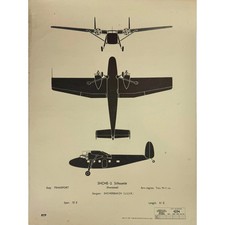
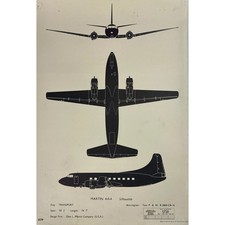
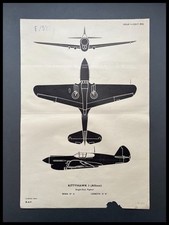
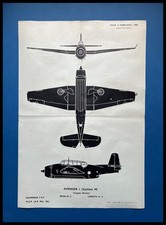
Training against captured threat equipment is valuable not because it reveals technical specifications, but because it converts intelligence into instinct. Recognition charts can teach what an enemy vehicle looks like. A real vehicle teaches how large it appears through dust, how its engine sounds at a distance, where crews lose sight of it, how quickly it changes direction, and how easily it is mistaken for something else under pressure. In military training, that difference matters because combat decisions are often made in seconds rather than after careful analysis.
Within the broader practice of reverse engineering foreign military technology, captured equipment serves as a bridge between technical intelligence and human performance. Exploited foreign materiel is routinely used to support training, testing, threat simulation and familiarisation programmes because understanding a threat’s strengths and weaknesses is only useful if crews can recognise and react to those characteristics in real time.[usna.edu]usna.eduJP 2-01, Joint and National Intelligence Support to Military…5 Jul 2017 — Exploitation of captured enemy equipment can provide critica…
The Friction Missing from Paper Threats
Recognition slides, intelligence briefings and vehicle guides are useful starting points, but they remove many of the cues that shape decisions in the field. A photograph freezes a target in perfect conditions. Real equipment exists in motion, partially obscured, viewed from unusual angles and encountered amid noise, fatigue and uncertainty.
This is why training organisations have long sought access to actual foreign equipment whenever possible. Technical intelligence programmes do not simply catalogue captured systems; they exploit them to understand how they function in practice and to translate that knowledge into training activities.[NASIC]nasic.af.milacquire assess exploitNASICAcquire, Assess, Exploit21 Nov 2016 — NASIC hands off the “FM” (foreign materiel) to their 87-member Foreign Materiel Exploitation S…
The gap between knowing and recognising is larger than it appears. Crews may memorise vehicle silhouettes yet still hesitate when confronted with:
- Unexpected proportions at real distances.
- Distinctive engine or track noises.
- Thermal or radar signatures that differ from assumptions.
- Camouflage patterns that distort shape recognition.
- Operational behaviour that does not match textbook examples.
A training aid can explain that a vehicle has vulnerable sectors or observation limitations. Walking around the actual vehicle makes those weaknesses tangible. The crew no longer remembers a fact; they remember an experience.
What Crews Learn by Seeing and Handling Systems
Captured equipment exposes details that are difficult to reproduce through diagrams or lectures. Operators gain a physical sense of how a threat system is built, how crews work inside it and where design compromises create opportunities or dangers.
Foreign materiel familiarisation programmes have historically included hands-on exposure to weapons and vehicles because handling the equipment creates a deeper understanding than studying descriptions alone. Training exercises conducted by US technical intelligence organisations have included foreign weapons familiarisation and vehicle exploitation specifically to build practical recognition skills.[Army]army.milReserve MI Battalion Conducts Training ExerciseReserve MI Battalion Conducts Training ExerciseMay 19, 2011 — 19 May 2011 — Training opportunities included a foreign weapons familia…
Several kinds of learning emerge from direct exposure:
Visual recognition becomes three-dimensional. Crews learn how a vehicle looks from elevated terrain, through optics, at night or when partially concealed.
Mechanical understanding improves identification. Recognising suspension layouts, exhaust placement, turret geometry or sensor locations becomes easier when personnel have physically inspected the system.
Enemy limitations become memorable. Blind spots, restricted visibility areas and awkward crew procedures are easier to remember after observing them directly.
Threat behaviour becomes believable. A vehicle’s acceleration, turning radius, noise and mobility characteristics become associated with a real object rather than an abstract intelligence report.
These lessons are especially important because technical intelligence organisations often exist partly to provide foreign equipment for troop familiarisation and training, ensuring that exploitation results reach operational personnel rather than remaining confined to analysts.[Wikipedia]Wikipedia203rd Military Intelligence Battalion203rd Military Intelligence Battalion

When Recognition Becomes Muscle Memory
The most effective threat training does not stop at identification. It aims to create automatic reactions.
Military crews under stress rarely perform lengthy analytical comparisons. They rely on patterns learned through repetition. Real equipment accelerates that process because the sensory experience is richer and more durable.
The National Training Center’s Cold War experience illustrates the principle. Opposing-force units used Soviet equipment where available and modified vehicles where necessary to create a more authentic Warsaw Pact appearance and operating environment. The objective was not museum accuracy; it was forcing American units to recognise and respond to realistic threat cues rather than familiar American patterns. U.S. Army Center of Military History[history.army.mil]history.army.milArmy Center of Military HistoryThe Origins and Development of the National Training…December 20, 2010 — by AW Chapman · Cited by 5 — T…
Repeated encounters with authentic or closely replicated systems create recognition pathways that become increasingly automatic:
- The crew sees a shape.
- Recognition occurs without deliberate comparison.
- Expected threat capabilities are recalled immediately.
- Tactical responses follow with less hesitation.
The value lies in shortening the interval between observation and action. Even a small reduction in recognition time can influence engagement decisions, manoeuvre choices and survivability.
Where Realism Changes Reactions Under Stress
Stress exposes weaknesses in training. Recognition that seems easy in a classroom often becomes unreliable when crews face noise, movement, information overload and time pressure.
This is one reason military organisations continue to invest in live training even as simulation technology improves. Simulators are extremely useful for rehearsing procedures and exposing personnel to rare or dangerous scenarios, but military and civilian training research alike consistently treats simulation as one element of a broader training system rather than a complete substitute for reality.[europa.eu]easa.europa.euEASATeaching and Testing in Flight Simulation Training DevicesNovember 17, 2015 — Simulators are especially suited for training situations which are impractical, difficult, dangerous or expensive to…
Research in other recognition-intensive domains reveals a similar pattern: synthetic representations help, but direct exposure to real-world examples remains critical. RAND’s work on automated target recognition found that systems trained only on artificial imagery performed poorly when confronted with real images, while real-world data remained essential for reliable recognition. Although focused on machine learning rather than human crews, the finding highlights a broader principle: reality contains details that simulations often miss.[RAND Corporation]rand.orgRRA683 1RAND CorporationOperationally Relevant Artificial Training for Machine…18 Nov 2020 — The authors explore whether an object-detection m…
For military personnel, those details include:
- Variations in lighting and weather.
- Imperfect visibility.
- Unexpected movement patterns.
- Sensory overload.
- The psychological pressure of making rapid decisions.
Captured equipment allows training organisations to expose crews to these factors before combat does.
Why Physical Familiarity Produces Better Judgement
The most important outcome of training against captured threat equipment is not technical knowledge. It is confidence grounded in familiarity.
A crew that has stood next to an enemy vehicle, watched it move, observed its limitations and repeatedly trained against it is less likely to freeze when encountering something similar in the field. Recognition becomes faster, uncertainty decreases and tactical decisions require less conscious effort.
That transformation—from intelligence report to lived experience—is the central mechanism that makes captured equipment valuable for training. Reverse engineering reveals how a foreign system works. Training with the actual system helps ensure that crews remember those lessons when conditions are noisy, confusing and unforgiving. In that moment, recognition is no longer an academic exercise. It has become instinct.
Amazon book picks
Further Reading
Books and field guides related to Why Real Threat Gear Beats Slides. Use these as the next step if you want deeper reading beyond the article.
Black Hawk Down
Rating: 4.0/5 from 21 Google Books ratings
Shows how real-world conditions and stress shape recognition and decision-making.
The Mission, the Men, and Me
Highlights practical learning under realistic operational conditions.
House to House
Demonstrates the gap between theoretical understanding and real-world encounters.
eBay marketplace picks
Marketplace Samples
Live-tested eBay searches with available results related to this page.
Endnotes
1.
Source: usna.edu
Link:https://www.usna.edu/Training/_files/jp2_01_20170705v2.pdf
Source snippet
JP 2-01, Joint and National Intelligence Support to Military...5 Jul 2017 — Exploitation of captured enemy equipment can provide critica...
2.
Source: [nasic]({{ ‘nasic/’ | relative_url }}). af.mil
Title: acquire assess exploit
Link:https://www.nasic.af.mil/News/Article-Display/Article/1010245/acquire-assess-exploit/
Source snippet
NASICAcquire, Assess, Exploit21 Nov 2016 — NASIC hands off the “FM” (foreign materiel) to their 87-member Foreign Materiel Exploitation S...
3.
Source: usni.org
Title: enhance maritime capability exploit foreign threat systems
Link:https://www.usni.org/magazines/proceedings/2022/may/enhance-maritime-capability-exploit-foreign-threat-systems
Source snippet
Naval InstituteEnhance the Maritime Capability to Exploit Foreign Threat...Battlefield exploitation of foreign matériel is normally perf...
4.
Source: army.mil
Title: Reserve MI Battalion Conducts Training Exercise
Link:https://www.army.mil/article/56806/reserve_mi_battalion_conducts_training_exercise
Source snippet
Reserve MI Battalion Conducts Training ExerciseMay 19, 2011 — 19 May 2011 — Training opportunities included a foreign weapons familia...
Published: May 19, 2011
5.
Source: Wikipedia
Title: 203rd Military Intelligence Battalion
Link:https://en.wikipedia.org/wiki/203rd_Military_Intelligence_Battalion
6.
Source: history.army.mil
Link:https://history.army.mil/portals/143/Images/Publications/catalog/69-3.pdf
Source snippet
Army Center of Military HistoryThe Origins and Development of the National Training...December 20, 2010 — by AW Chapman · Cited by 5 — T...
Published: December 20, 2010
7.
Source: easa.europa.eu
Title: EASATeaching and Testing in Flight Simulation Training Devices
Link:https://www.easa.europa.eu/en/downloads/22636/en
Source snippet
November 17, 2015 — Simulators are especially suited for training situations which are impractical, difficult, dangerous or expensive to...
Published: November 17, 2015
8.
Source: army.mil
Title: reality check
Link:https://www.army.mil/article/286728/reality_check
Source snippet
Article | The United States Army1 Jul 2025 — Haptics improvements to Army simulation training makes virtual environments feel more realis...
9.
Source: rand.org
Title: RRA683 1
Link:https://www.rand.org/pubs/research_reports/RRA683-1.html
Source snippet
RAND CorporationOperationally Relevant Artificial Training for Machine...18 Nov 2020 — The authors explore whether an object-detection m...
10.
Source: oecd-nea.org
Link:https://www.oecd-nea.org/upload/docs/application/pdf/2020-01/csni-r97-13-1.pdf
Source snippet
Nuclear Energy Agency (NEA)task 5: role of simulators in operator trainingThe generic conclusions identified are: a) there is an extensiv...
11.
Source: cal-tek.eu
Link:https://www.cal-tek.eu/proceedings/i3m/2021/dhss/006/pdf.pdf
Source snippet
Simulation-based training in the use of the EU-SENSE...by M Gawlik-Kobylińska · 2021 · Cited by 6 — The aim of the article is to build u...
Additional References
12.
Source: researchgate.net
Link:https://www.researchgate.net/publication/363924730_Evaluation_of_Simulator_Use_in_Maritime_Education_and_Training_MET_Institutes_Evaluation_of_Simulator_Use_in_Maritime_Education_and_Training_MET_Institutes
Source snippet
(PDF) Evaluation of Simulator Use in Maritime Education...29 Sept 2022 — This study aims to evaluate the cadets' perception of the simul...
13.
Source: greydynamics.com
Link:https://greydynamics.com/fmep-us-foreign-material-exploitation-programs/
Source snippet
FMEP: US Foreign Material Exploitation ProgramsUS Foreign Material Exploitation Programs (FMEPs) covertly and overtly acquire and analyse...
14.
Source: youtube.com
Link:https://www.youtube.com/watch?v=Uix2i9qy-bo
Source snippet
Inside US Military Facility Moving Captured Soviet EquipmentWelcome back to The Daily Aviation for a feature on the display of soviet opp...
15.
Source: astj.journals.ekb.eg
Title: article 418382 8b6db54403953cf7c0b775c8eda5ce1f
Link:https://astj.journals.ekb.eg/article_418382_8b6db54403953cf7c0b775c8eda5ce1f.pdf
Source snippet
Review of Real-time Military Training Simulator Based on...by N Hussen · 2025 · Cited by 6 — Current simulators often struggle to respon...
16.
Source: medium.com
Link:https://medium.com/%40carbonemd/chapter-26-joining-the-soviet-32nd-guards-motorized-rifle-regiment-opfor-at-[fort-irwin
Source snippet
ational Training Center. They operated genuine Soviet equipment —...
17.
Source: reddit.com
Link:https://www.reddit.com/r/ukraine/comments/th4887/captured_russian_mtlb_repaired_and_repainted_for/
Source snippet
es, weapons classes, map reading, marching and formations...
18.
Source: facebook.com
Link:https://www.facebook.com/groups/1233663467165896/posts/2135115427020691/
Source snippet
ed from tank components for a static role. On the range we...
19.
Source: defenceiq.com
Title: what are the challenges of simulation in military training
Link:https://www.defenceiq.com/combat-air/articles/what-are-the-challenges-of-simulation-in-military-training
Source snippet
This includes stress responses, uncertainty and nuanced social interactions which...Read more...
20.
Source: nsarchive2.gwu.edu
Title: Tactical Site Exploitation
Link:https://nsarchive2.gwu.edu/NSAEBB/NSAEBB410/docs/Tactical%20Site%20Exploitation.pdf
Source snippet
Site Exploitation.pdfThis cell is specifically trained in assisting leaders in planning and training for searches. Successful detection d...
21.
Source: rki.de
Title: capstone excercise
Link:https://www.rki.de/EN/Topics/Infectious-diseases/Biological-threats/Projects-networks/UNSGM/capstone_excercise.pdf?__blob=publicationFile&v=1
Source snippet
Evaluation of the Capstone Exercise 2020│2022The evaluation team observed some frustration among the team members about their reliance on...
Topic Tree